Why a modular wing
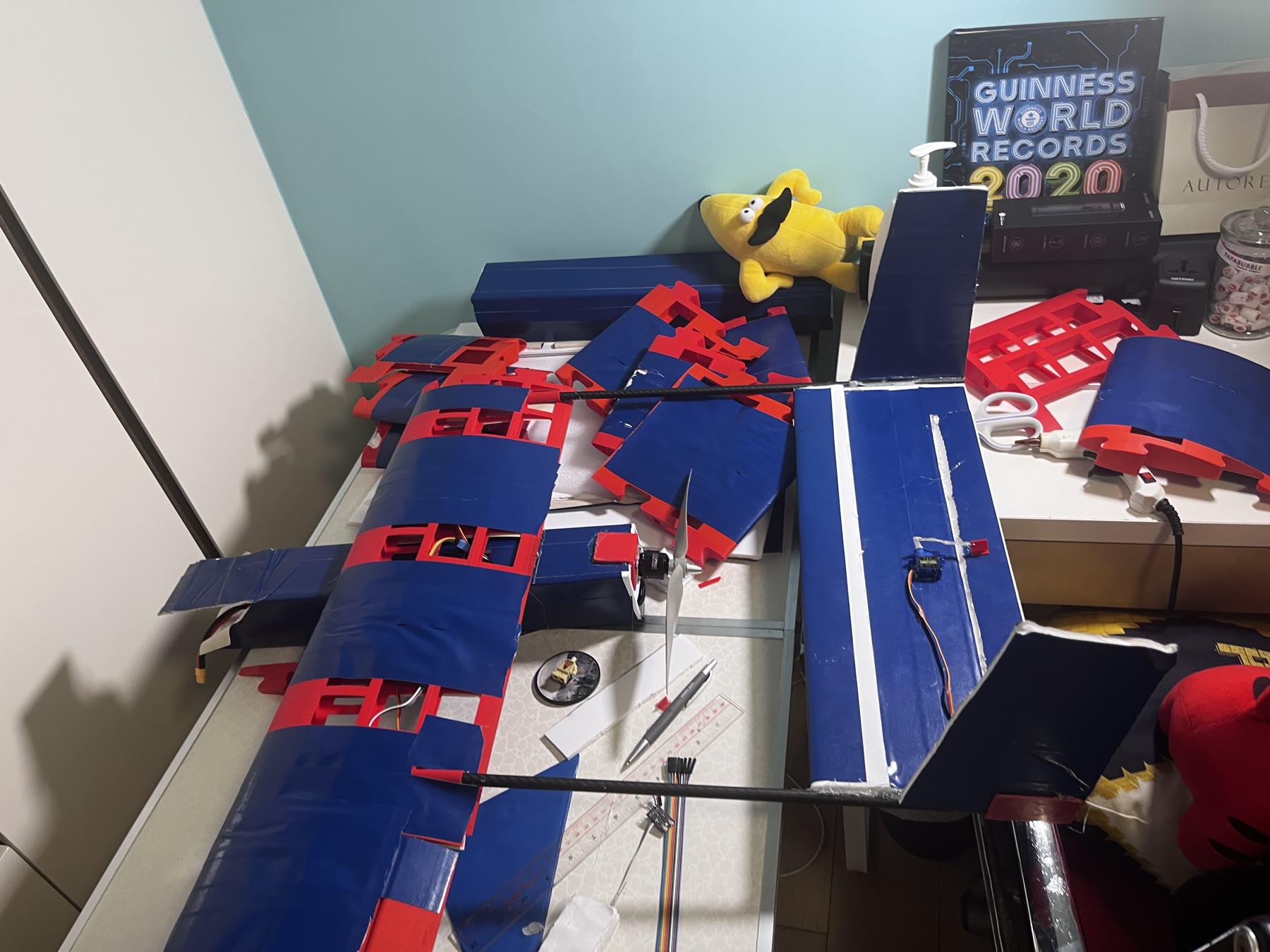
I designed this 1.8 m fixed-wing plane with travel to Malaysia in mind. A one-piece wing would be awkward to print, pack, and carry, so I split the airframe into sections. That made the joints part of the design from the start: each section has to align when assembled, while the main structural path still needs to carry loads across the span.
This was my first time designing a 3D-printed wing. The CAD work taught me that reducing print material is only useful if the structure left behind can still support the wing.
What the wing taught me
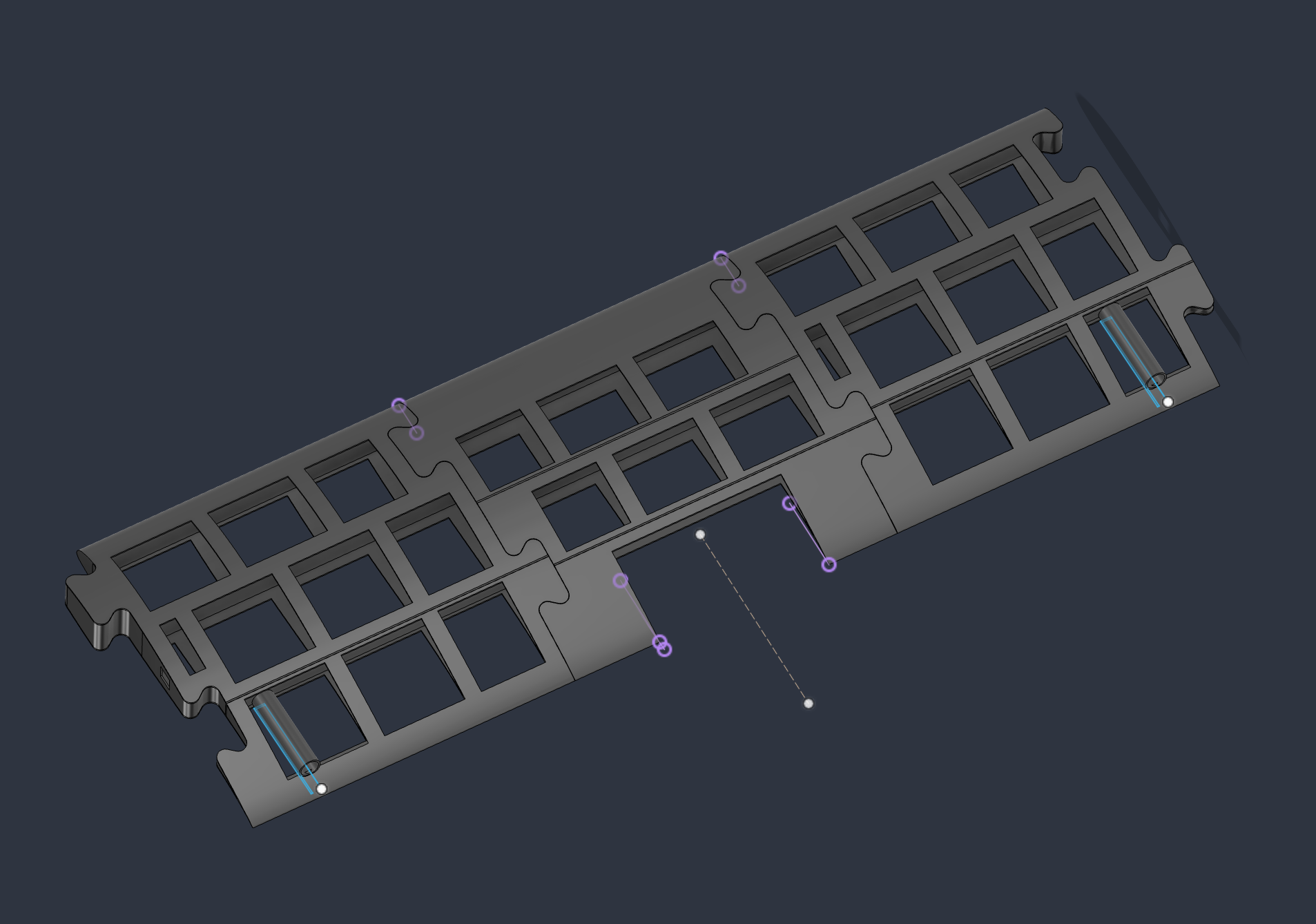
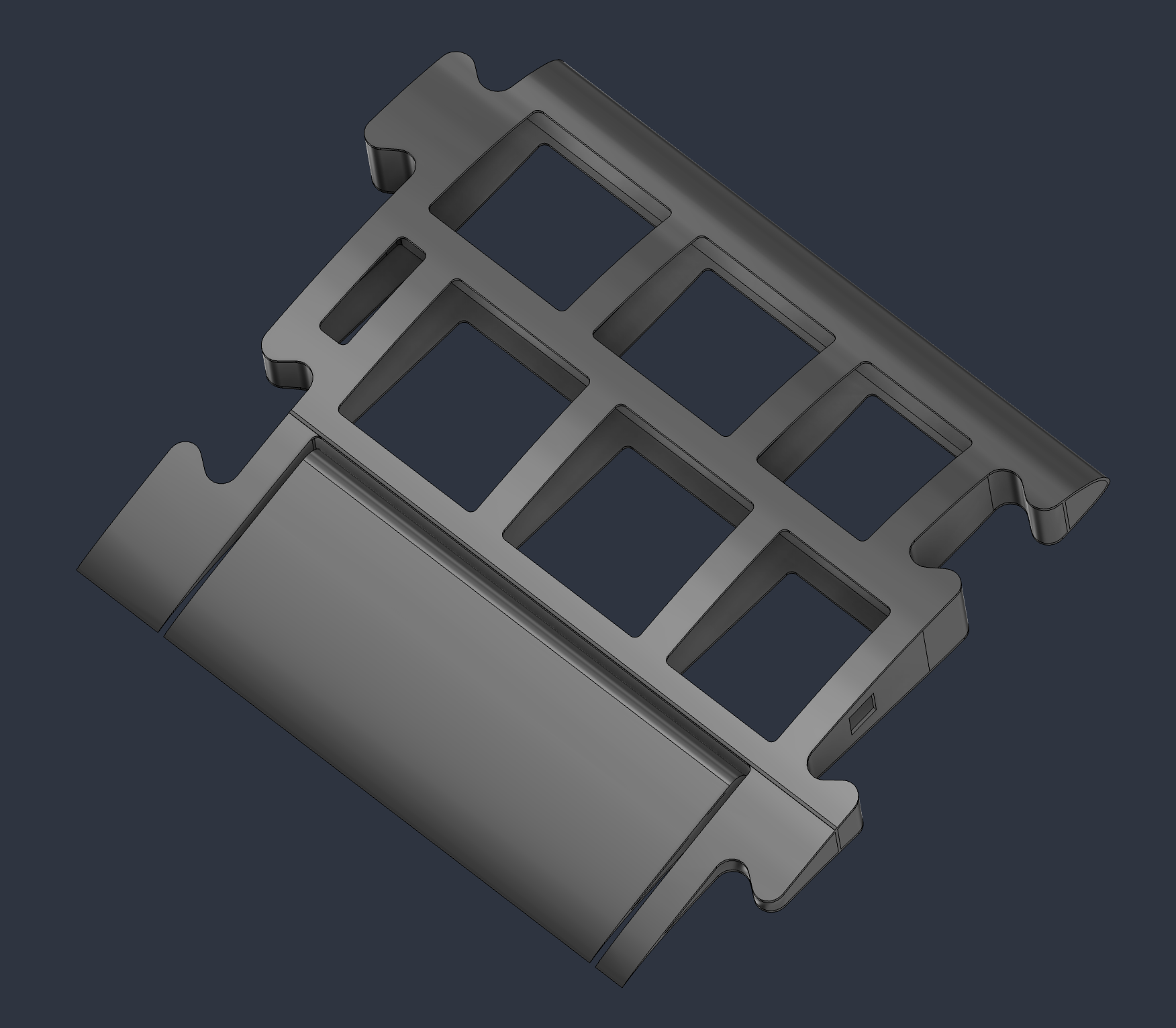
The open bays in the printed panels remove material that a solid print would use. The spar matters more than simply adding plastic back: the spar provides a continuous path for the wing’s bending loads, while the printed structure defines the airfoil shape and transfers loads into that path. The panel joints also need to keep the sections aligned without becoming unnecessarily heavy.
What happened in the first build
Without a spar, the wing deflected substantially. That flexibility contributed to unstable behavior and made clear that lightening the printed panels could not substitute for a continuous bending member. The video records an early hand-launch trial, not a structural measurement.
I also saw instability around the tail in the pusher-prop configuration. I would revisit the center of gravity, static margin, tail size, and propeller flow before attributing that behavior to any one component. For the next iteration, I would establish a spar route first, measure wing stiffness with the sections assembled, and then remove material around the verified load path.